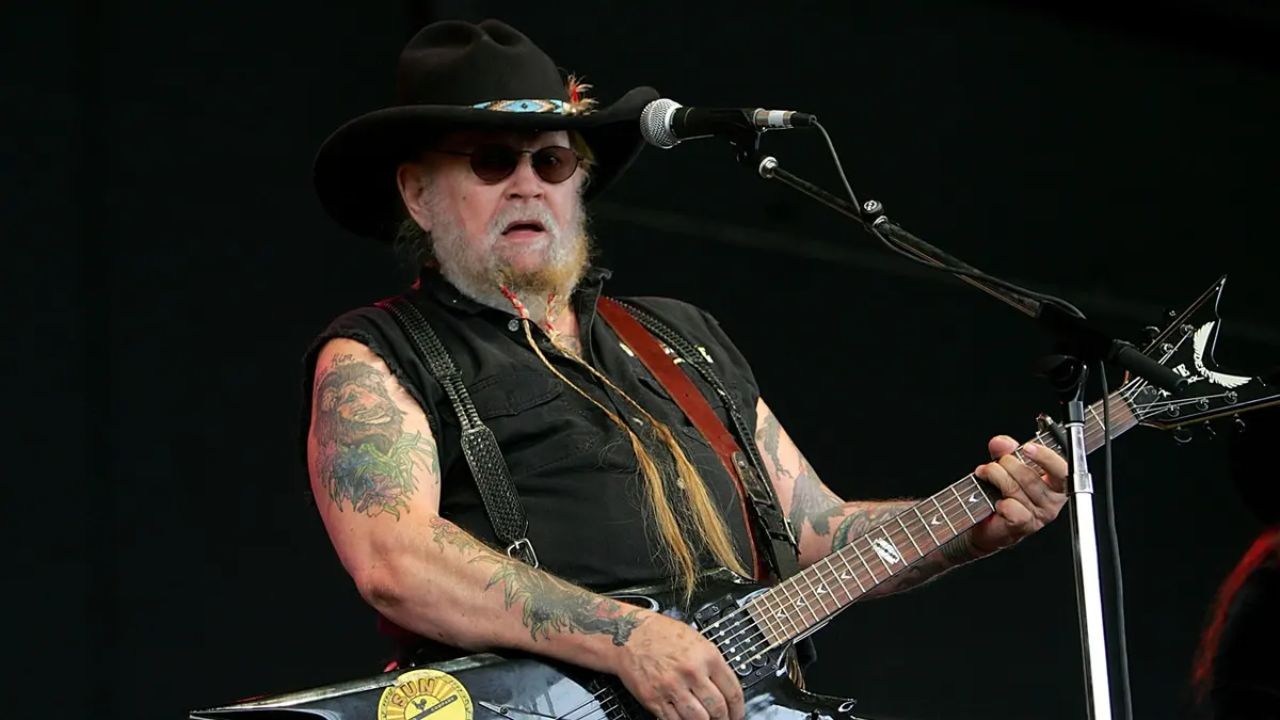
On Wednesday, April 29, 2026, the world of outlaw country music lost one of its most complex and controversial figures. David Allan Coe, the singer and songwriter behind anthems like “Take This Job and Shove It” and “You Never Even Called Me By My Name,” died at the age of 86. His death, confirmed by his wife and representatives, marked the end of a storied career that defied categorization, blending his time in prison, his vast musical talent, and a carefully crafted persona of a rebellious outsider into a singular legend.
The initial reports from his camp included a firm date and time but left a crucial question unanswered. According to statements from his representative and his wife, Kimberly Hastings Coe, the singer passed away around 5:00 p.m. Eastern Time on Wednesday in an intensive care unit. While his death was quickly reported by major outlets, the specific cause of death was not initially disclosed. For fans awaiting details, the silence was a final, fitting piece of mystery from an artist who often blurred the lines between fact and folklore.
You Might Like: Jack Antonoff: Married Life, His Wife Margaret Qualley, and the Family That Shaped His Music
A Decline Shrouded in Silence
While the immediate cause of David Allan Coe’s passing remains private at the family’s request, a full picture of his later years reveals a man battling declining health. According to reports, the singer had faced a period of significant physical struggles long before his admission to intensive care. In 2021, he was hospitalized with a severe bout of COVID-19, a battle from which he never fully seemed to recover in the public eye.
David Allan Coe has passed away at the age of 86.
According to multiple reports, he died around 5pm ET today (Wed, April 29) in the hospital. No official cause of death has been released at this time. pic.twitter.com/Qfsojk10b0
— Country Chord (@CountryChord) April 30, 2026
Prior to that, he had also undergone knee replacement surgery in 2019, adding to a litany of health issues that limited his appearances in his final years. While friends and family kept much of his condition private, the general understanding was that his health had been “in decline” for the better part of the previous half-decade.
The Man Behind the Rhinestones and Controversy
Born in Akron, Ohio, on September 6, 1939, David Allan Coe’s life was a study in hard realities and intentional myth-making. He spent much of his youth in reformatories and prisons, famously writing songs in his head, including the blues of “Penitentiary Blues” while incarcerated. His time in Ohio State Penitentiary from 1963 to 1967 became the bedrock of his artistic identity. He would often boast, “I’d have never made it through prison without my music,” during his rare, introspective interviews.
Despite maintaining a reputation as a controversial figure for racist and misogynistic lyrics in some underground recordings—claims he long denied, often citing them as satire—his contributions to country music are indelible. He was the first man to record “Tennessee Whiskey,” wrote Tanya Tucker’s “Would You Lay With Me (In a Field of Stone),” and gave Johnny Paycheck the anthem that became a symbol for blue-collar resignation.
Also See: Adrien Broner Net Worth 2026: From ‘About Billions’ to Barely Thousands
Ultimately, David Allan Coe’s legacy is as multifaceted as the life he led. He remains a hero to purists of the outlaw movement and a figure of caution for those who find his work repugnant. Yet, as the last notes fade from his body of work, the discussion shifts. What cannot be debated is the impact of a man who, according to a representative, “appreciated all of the fans” even as he faced the realities of his own decline. He leaves behind his wife, Kimberly, two children, and a legacy of music that refuses to be easily dismissed, even as the cause of his death remains a final, private secret in a life full of public tales.