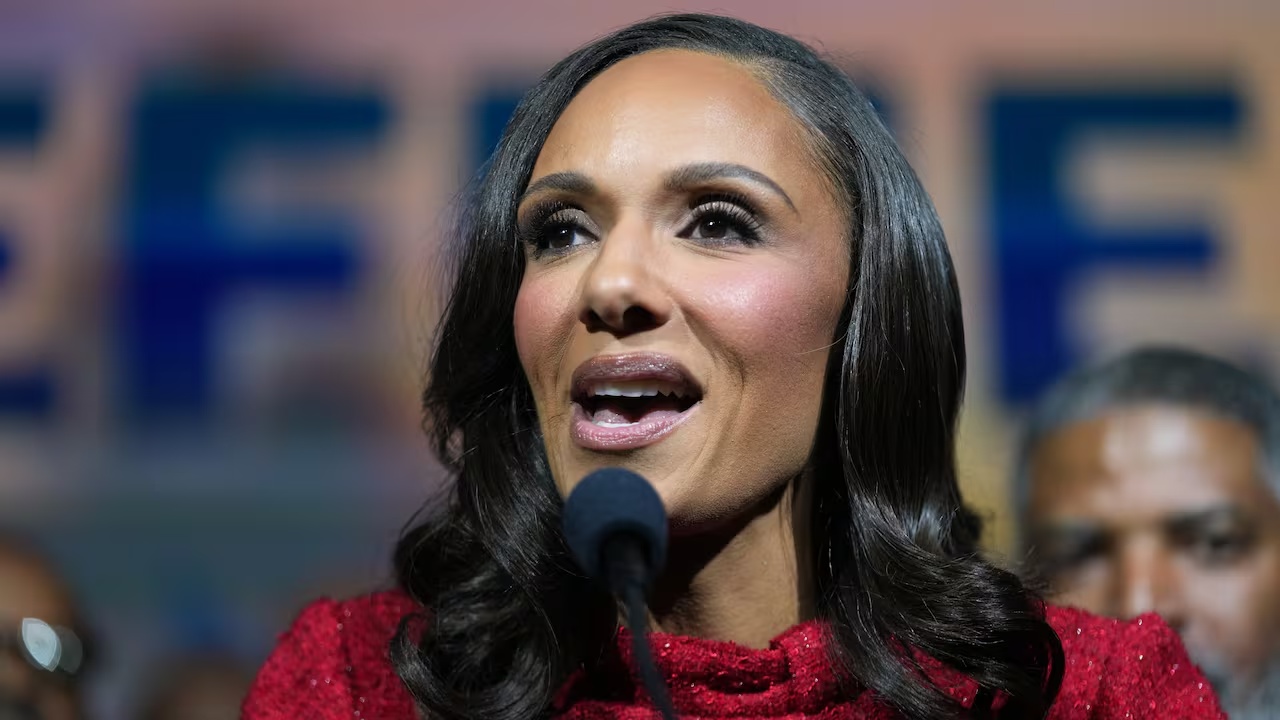
In a landmark victory for America’s Motor City, Mary Sheffield has been elected as the next mayor of Detroit, a win that shatters a longstanding political glass ceiling. She will become the first woman, and the first Black woman, to hold the office in the city’s history. The Associated Press projected her win over challenger Reverend Solomon Kinloch Jr., marking a decisive new chapter for Detroit as it prepares to move beyond the three-term leadership of Mayor Mike Duggan. Her election isn’t just a personal triumph; it’s seen as a significant moment for Democratic leadership in a heavily Democratic-leaning city, offering a glimpse into the party’s direction ahead of the 2026 midterms.
Sheffield, who currently serves as the President of the Detroit City Council, secured a commanding victory with over 77% of the vote. At 38 years old, her rise to the city’s highest office is the culmination of a political career that has been breaking age records for over a decade. She first made history in 2013 when, at just 26 years old, she became the youngest person ever elected to the Detroit City Council.
She repeated this feat in 2022 by becoming the youngest person ever to serve as its president. Her deep-rooted connection to Detroit and her extensive experience in city governance were central themes of her campaign, which focused on building a more inclusive and equitable city for all residents.
You Might Like: The Core Policies of Abigail Spanberger
A Deep-Rooted Democratic Identity
To understand Mary Sheffield’s political career is to recognize her deeply ingrained identity as a Democrat. Her affiliation with the Democratic Party is a consistent thread woven through her political journey, from her early run for the Michigan House of Representatives to her tenure on the nonpartisan but ideologically clear Detroit City Council. This party alignment is a defining feature of Detroit’s electorate, and Sheffield’s policies and endorsements firmly place her within the progressive wing of the party. Her political philosophy has been shaped by a lifetime of exposure to social justice issues, growing up as the daughter of Reverend Horace Sheffield III, a well-known civil rights activist and pastor in Detroit.
Her Democratic values are not merely a label but are reflected in the legislative work she has championed. During her storied career on the City Council, Mary Sheffield sponsored and passed a suite of progressive policies aimed at protecting and uplifting Detroit’s most vulnerable residents. Key among these are the Inclusionary Housing ordinance, which promotes affordable housing; the Right to Counsel legislation, which provides legal representation for tenants facing eviction; and the establishment of the Detroit Reparations Taskforce. These initiatives, alongside programs like the Homeowner Property Tax Exemption (HOPE), demonstrate a commitment to addressing economic inequality and systemic injustice—cornerstones of her Democratic platform.
This policy record earned her robust support from key segments of the Democratic coalition in her mayoral race. She garnered endorsements from powerful labor unions, including the Service Employees International Union (SEIU) Michigan and the United Auto Workers (UAW), as well as from prominent Democratic figures like Minnesota Attorney General Keith Ellison. Crucially, she also received the backing of the outgoing mayor, Mike Duggan, a Democrat who is now running for governor of Michigan as an independent. This broad base of support from within her party was instrumental in her successful campaign.
Also See: Leanne Morgan: A Glimpse into the Comedian’s Family Life
Forging Detroit’s Future
As she prepares to take office on January 2, 2026, Mayor-elect Mary Sheffield faces the task of steering a city that has seen significant progress but still grapples with profound challenges. Detroit has experienced improved city services and balanced budgets under Mayor Duggan, yet Sheffield has pledged to ensure this revival reaches every corner of the city.
Her campaign promises were a direct extension of her council work: addressing gun violence, improving affordable housing, and investing in the city’s aging infrastructure. In her victory speech, she struck a unifying tone, stating, “I am here to listen to you, to fight for you and to serve you… because, at the end of the day, we all want the same thing, a Detroit that works for everyone.”
Mary Sheffield’s election is a historic moment of symbolic importance, but her impact will be measured by the tangible progress she makes on these pledges. As a lifelong Detroiter, a committed Democrat, and a proven advocate for equitable policies, she is poised to lead the city with a focus on ensuring that its ongoing renaissance benefits all of its residents. Her journey from the youngest council member to the city’s first female mayor is a powerful narrative, but the next chapter—for her and for Detroit—is just beginning.