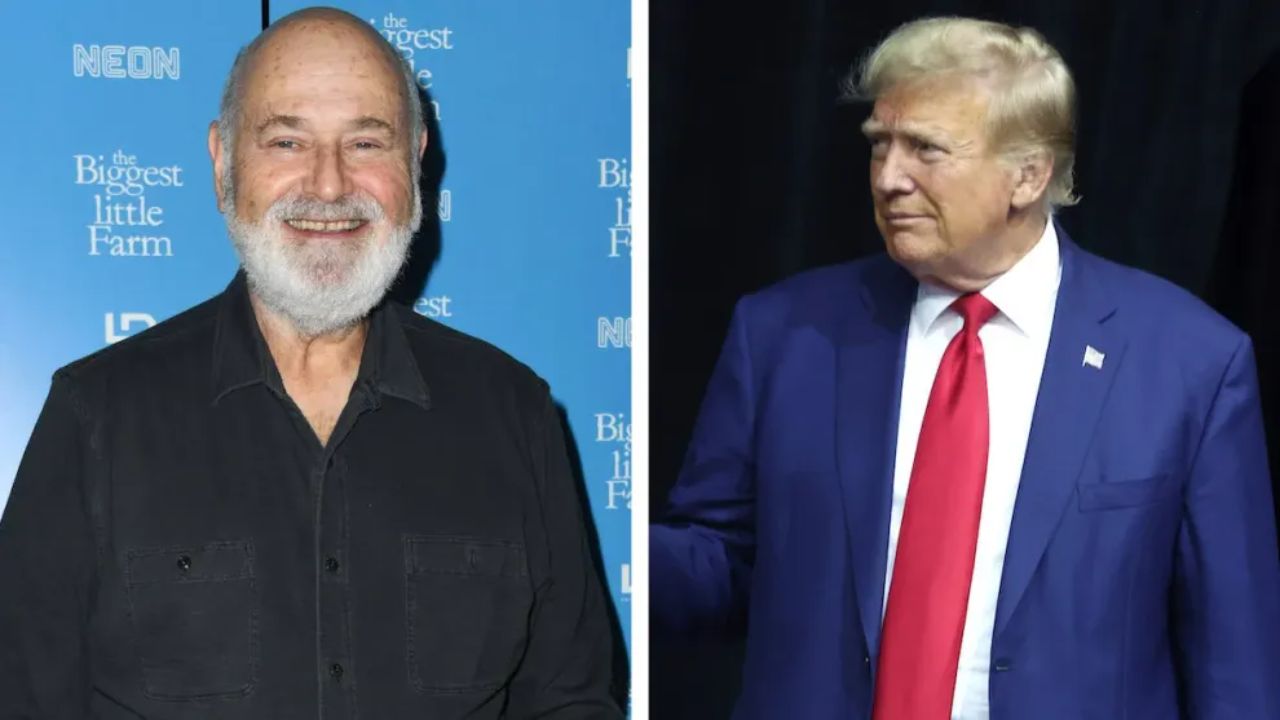
Rob Reiner, the acclaimed actor and director known for classics like “The Princess Bride” and “When Harry Met Sally,” was also a prominent figure in American politics. Throughout his life, he embodied liberal values, consistently aligning himself with progressive causes and Democratic leaders while vocally opposing conservative ideologies and Republican figures.
His political views were deeply rooted in advocacy for social justice, environmental protection, and equality, making him a vocal presence in Hollywood’s activist circles. Reiner’s engagement in politics spanned decades, from supporting presidential candidates to founding organizations that challenged discriminatory laws, all while maintaining a firm stance against what he saw as regressive policies.
You Might Like: How Penny Marshall Built a $45 Million Fortune Before Her Passing
Democratic Activism and Liberal Causes
Rob Reiner identified unequivocally as a Democrat, dedicating time and resources to the party’s candidates and initiatives. He campaigned for Al Gore in 2000, Howard Dean in 2004, Hillary Clinton in 2008 and 2016—donating significantly to her campaigns—and Joe Biden in 2020. This loyalty reflected his broader commitment to liberal principles, such as universal healthcare, education reform, and civil rights.
Rob Reiner spent decades defending democracy and fighting for equality – even when it wasn’t easy or popular. At a moment when silence is safer, his willingness to speak out is a reminder that protecting democracy requires courage.
RETWEET to honor Reiner’s legacy of justice ♥️ pic.twitter.com/TyTKBqywxx
— Protect Kamala Harris ✊ (@DisavowTrump20) December 15, 2025
One of his notable contributions was co-founding the American Foundation for Equal Rights, which fought California’s Proposition 8 banning same-sex marriage, showcasing his dedication to LGBTQ+ equality. Reiner also chaired the successful 1998 campaign for Proposition 10, creating First 5 California to fund early childhood development programs, and served as its chairman until 2006. His environmental activism included efforts to preserve California’s Ahmanson Ranch as a state park, and he was involved in anti-smoking campaigns and promoting social responsibility in entertainment.
Reiner’s liberal ethos extended to broader political involvement, such as serving on the advisory board of the Committee to Investigate Russia in 2017, aimed at probing foreign interference in U.S. elections. He advocated for taxing the wealthy and supported films like “Shock and Awe,” which critiqued the Iraq War, blending his filmmaking with political commentary. These actions underscored his rejection of conservative policies, positioning him as a counterforce to Republican agendas.
Also See: Remembering Rachael Carpani – The Hidden Battle Behind Her Iconic Roles
Opposition to Trump and MAGA
Rob Reiner’s disdain for Donald Trump and the MAGA movement was unyielding, often expressed through public statements and media appearances. Following Trump’s 2016 election, Reiner compared him to Harvey Weinstein as an “abuser.” He warned of Trump’s detrimental impact on America, viewing the MAGA ideology as a threat to democratic norms.
Donald Trump alleges that Rob Reiner’s death was “reportedly due to the anger he caused others through his massive, unyielding, and incurable affliction with a mind crippling disease known as Trump Derangement Syndrome” pic.twitter.com/4he3VmpZW6
— DiscussingFilm (@DiscussingFilm) December 15, 2025
In 2021, Reiner developed a TV project exploring Trump’s ties to Vladimir Putin, further highlighting his concerns about authoritarian influences. His criticisms intensified over time; in September 2025, he lambasted Trump and the FCC over the suspension of “Jimmy Kimmel Live!,” suggesting it might curtail free speech. Reiner frequently used social media and interviews to decry what he called “Trump Derangement Syndrome” in reverse, arguing that opposition to Trump was rational given the stakes.
Tragically, Rob Reiner’s death on December 14, 2025, alongside his wife Michele, drew inflammatory comments from Trump, who baselessly suggested it stemmed from Reiner’s anti-Trump fervor. This response from the president only amplified Reiner’s legacy as a fearless liberal critic, undeterred by political backlash. His passing, amid an ongoing investigation, has sparked reflections on the intersection of politics and personal safety in a polarized era.