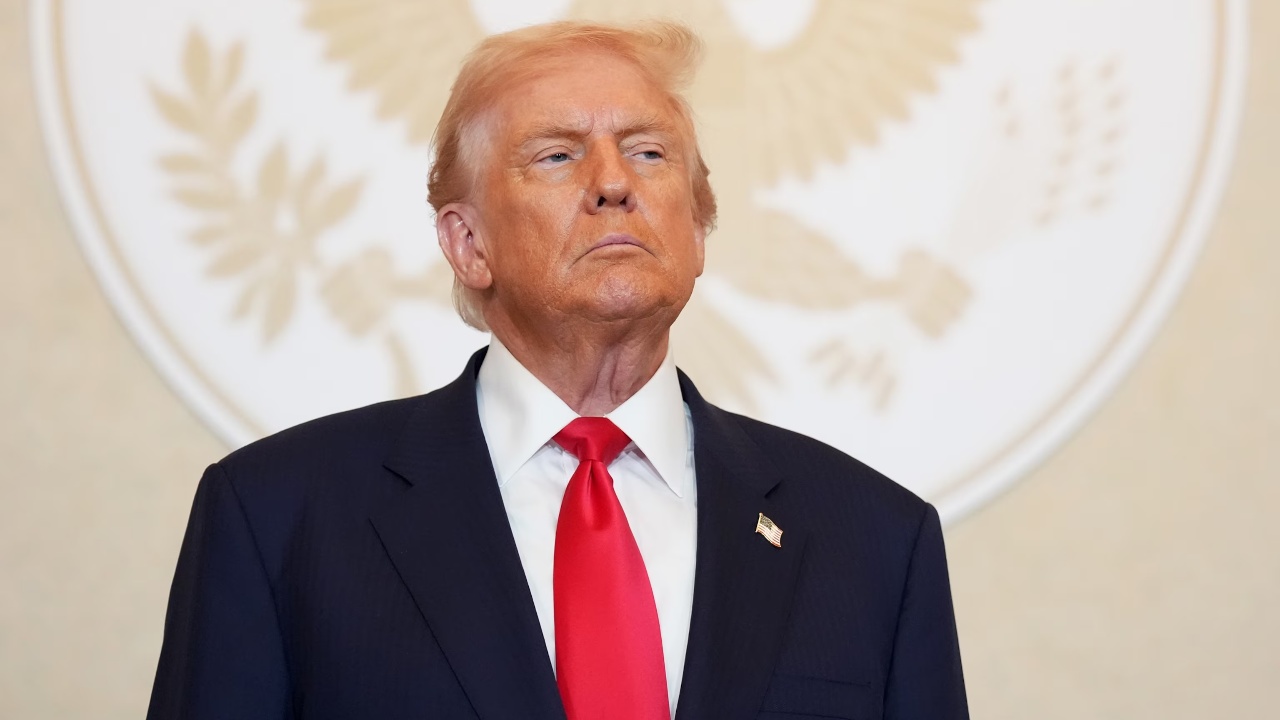
In a move that has ignited both public interest and market reactions, President Donald Trump has once again promised a substantial cash payment to most Americans. Through a post on his Truth Social platform, Trump announced a plan for a “dividend of at least $2000 a person,” explicitly stating that high-income earners would be excluded from receiving it. He framed this payment as a direct share of the “trillions of dollars” he claims the U.S. government is collecting from tariffs on imported goods.
The announcement sparked a modest rally in cryptocurrency markets, with Bitcoin and Ether prices ticking upward as traders speculated on the potential for increased consumer spending and market inflows. However, this latest promise is not a new idea but the revival of a concept Trump has floated multiple times throughout the year, with proposed amounts varying from $1,000 to as much as $5,000. The crucial question remains: is this a stimulus check that will soon arrive in bank accounts, or is it a political gambit facing significant legal and legislative hurdles?
You Might Like: Is Gay Marriage Still Legal in the United States in 2025?
The Promise and Its Problematic Path to Your Pocket
On November 9, 2025, Trump articulated his vision for the tariff dividend, connecting it directly to his broader trade policy. “We are taking in Trillions of Dollars and will soon begin paying down our ENORMOUS DEBT, $37 trillion,” he stated, positioning the dividend as a benefit of his aggressive tariff strategy. The core idea is that revenue collected from taxes on imports would be used for a dual purpose: reducing the national debt and cutting a check directly to the American people.
However, the reality of the situation is far more complex. A chorus of experts and officials has pointed out that the President cannot unilaterally authorize such a payment. Federal spending of this nature requires approval and appropriation from Congress, a body where the idea has historically faced skepticism from both sides of the aisle. Republican Senator Bernie Moreno was blunt in his assessment earlier this year, telling reporters, “It’ll never pass,” citing the nation’s massive debt.
Furthermore, the fundamental math behind the proposal has been called into question. Tax policy experts like Erica York have crunched the numbers, noting that if 150 million adults qualified for a $2,000 payment, the total cost would be around $300 billion. The revenue from new tariffs, however, has been estimated at around $120 billion, creating a significant funding gap. After accounting for the broader economic effects on other tax revenues, the net gain might be as low as $90 billion—far short of what’s needed.
BREAKING: President Trump announces that he will be paying a “tariff dividend” of at least $2,000 per person.
Stimulus checks are officially back. pic.twitter.com/Dt4UgHVMrT
— The Kobeissi Letter (@KobeissiLetter) November 9, 2025
The entire plan also faces an existential threat from the judicial branch. The U.S. Supreme Court recently heard arguments on the legality of the tariffs Trump imposed using presidential emergency powers. Reports from the proceedings indicated that the justices sounded skeptical, raising concerns that the tariffs effectively act as a revenue-raising tax that Congress never voted for. A ruling against the administration, expected by next June, could not only halt the tariffs but could also force the government to refund over $100 billion already collected to importers, completely evaporating the supposed funding source for the dividend.
Also See: Olivia Dean: A Legacy of Strength from Mother Christine
A Recurring Idea with an Uncertain Future
This is not the first time Americans have heard about a potential tariff rebate. The idea has been a recurring theme in Trump’s rhetoric. In an October interview with One America News, he said he was “looking at something” in the range of $1,000 to $2,000, framing it as a “dividend to the people of America.” Even earlier in the year, alongside former advisor Elon Musk, he floated the idea of a much larger $5,000 “dividend” check funded by savings from a government efficiency initiative, but those payments never materialized.
The administration’s own officials have sent mixed signals. While Trump promotes the dividend, his Treasury Secretary, Scott Bessent, has consistently emphasized that the primary focus for tariff revenue is paying down the national debt. When asked about the $2,000 dividend promise, Bessent suggested it might not come as a direct check but could instead be realized through the tax cuts already passed in Trump’s agenda, such as the elimination of taxes on tips and overtime.
For now, the promise of a $2,000 stimulus check funded by tariffs remains just that—a promise. It is an idea that captures attention and stirs debate, but one that is entangled in a web of legislative, legal, and budgetary challenges. Without action from a skeptical Congress and a favorable ruling from the Supreme Court, the much-discussed tariff dividend is likely to remain out of reach for the average American.