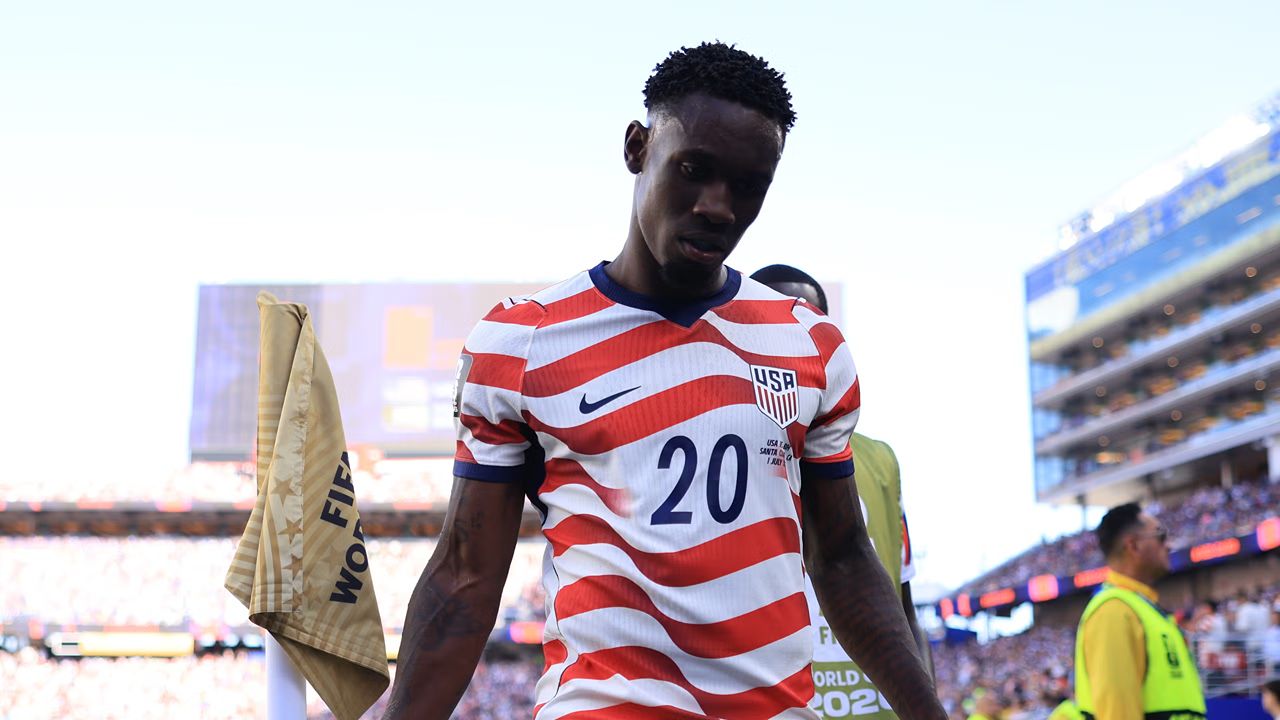
Few stories at the 2026 World Cup have generated as much buzz as that of Folarin Balogun. The U.S. men’s national team striker has been a breakout star on home soil, but his path to the pitch has been anything but ordinary. To understand how Balogun got cleared to play, you have to look at two entirely separate, yet equally dramatic, clearance processes: the long bureaucratic road that made him a USMNT player in the first place, and the frantic, last-minute decision that allowed him to suit up for a crucial knockout match after a controversial red card. Both involve a mix of birthright, FIFA rules, and a healthy dose of political intrigue.
His story is one of unique circumstance. Born in Brooklyn, New York, in July 2001, Balogun’s American citizenship was almost an accident. His Nigerian parents were living in London when his mother, Florence, traveled to New York while seven months pregnant. When she tried to fly back to the UK, the airline refused to let her board due to her advanced pregnancy. The family stayed in New York for two months, and Balogun was born on U.S. soil.
Under the 14th Amendment of the U.S. Constitution, this made him an automatic U.S. citizen. He grew up in England and came through the Arsenal academy, representing England at various youth levels from U17 to U21. He was also eligible to play for Nigeria through his parents. This made him one of international soccer’s most coveted dual-national talents.
You Might Like: What Is Joey Chestnut’s Net Worth in 2026? A Deep Dive Into His Wealth
The One-Time Switch: From England to the USA
The first major clearance hurdle was not about a red card, but about a change of allegiance. In May 2023, Balogun made the decision to represent the United States senior team, spurning the interest of both England and Nigeria. However, because he had already played for England in official youth competitions, he couldn’t simply choose the USMNT on a whim. FIFA rules require a formal process for a one-time switch of national association.
One airline’s decision changed football history forever.
Folarin Balogun Nigerian parents were living in the United Kingdom when his mother travelled to New York, USA to visit family while seven months pregnant.
She planned to return to London before giving birth, but airline… pic.twitter.com/oO6ELYrMF6
— Africa First (@AfricaFirsts) July 6, 2026
The process began when U.S. Soccer submitted a formal request to FIFA to change Balogun’s eligibility from England to the United States. This application had to be accompanied by documentation proving his citizenship and his eligibility to represent the USMNT. Crucially, FIFA had to approve this request. The governing body reviewed the case and, given that Balogun met all the criteria—he was a U.S. citizen by birth and had not played a senior competitive match for England—they granted the switch.
This official FIFA approval in the spring of 2023 is what cleared him to begin his senior international career with the Stars and Stripes. He made his debut shortly after and quickly became a key figure for the team.
Also See: Travis Kelce Net Worth 2026: The Financial Playbook of an NFL Icon
The Red Card Reprieve: Article 27 to the Rescue
The second, and far more controversial, clearance came during the 2026 World Cup itself. In a Round of 32 match against Bosnia and Herzegovina, Balogun received a straight red card in the 64th minute after a VAR review for a challenge on defender Tarik Muharemovic. Under FIFA’s tournament rules, a straight red card carries an automatic one-match suspension. This meant he was set to miss the vital Round of 16 clash against Belgium. Normally, a team cannot appeal a red card or its subsequent suspension, so Balogun’s World Cup looked to be over.
FIFA using article 27 of code
“The judicial body may decide to fully or partially suspend the implementation of
a disciplinary measure. By suspending the implementation of the sanction, the judicial body subjects the
person sanctioned to a probationary period of 1 to 4 years” https://t.co/dEyu773fQZ pic.twitter.com/eFKRWwcVgy— Rob Harris (@RobHarris) July 5, 2026
However, in a stunning twist, the FIFA Disciplinary Committee intervened. They applied Article 27 of the FIFA Disciplinary Code, a rule that allows them to suspend the implementation of a match suspension for a probationary period. The decision, announced on July 5, 2026, stated that the one-match ban was suspended for one year. This meant Balogun was cleared to play against Belgium. The decision was reportedly made after U.S. President Donald Trump personally called FIFA President Gianni Infantino to ask for a review of the suspension. The U.S. Soccer Federation accepted the decision, stating they were “pleased that Folarin Balogun is eligible to compete”.
The ruling sparked immediate backlash, with the Belgian FA expressing astonishment and UEFA stating that FIFA had “crossed a red line”. Ultimately, the process was a controversial application of FIFA’s own rules, clearing a star player for one of the biggest games of the tournament.