Based on reports from protest organizers, the “No Kings” protests on October 18, 2025, were a massive demonstration of public dissent, drawing nearly seven million participants across the United States. This turnout would make it the largest single-day protest in modern American history, significantly surpassing the five million people the same coalition said attended its previous nationwide day of action in June.
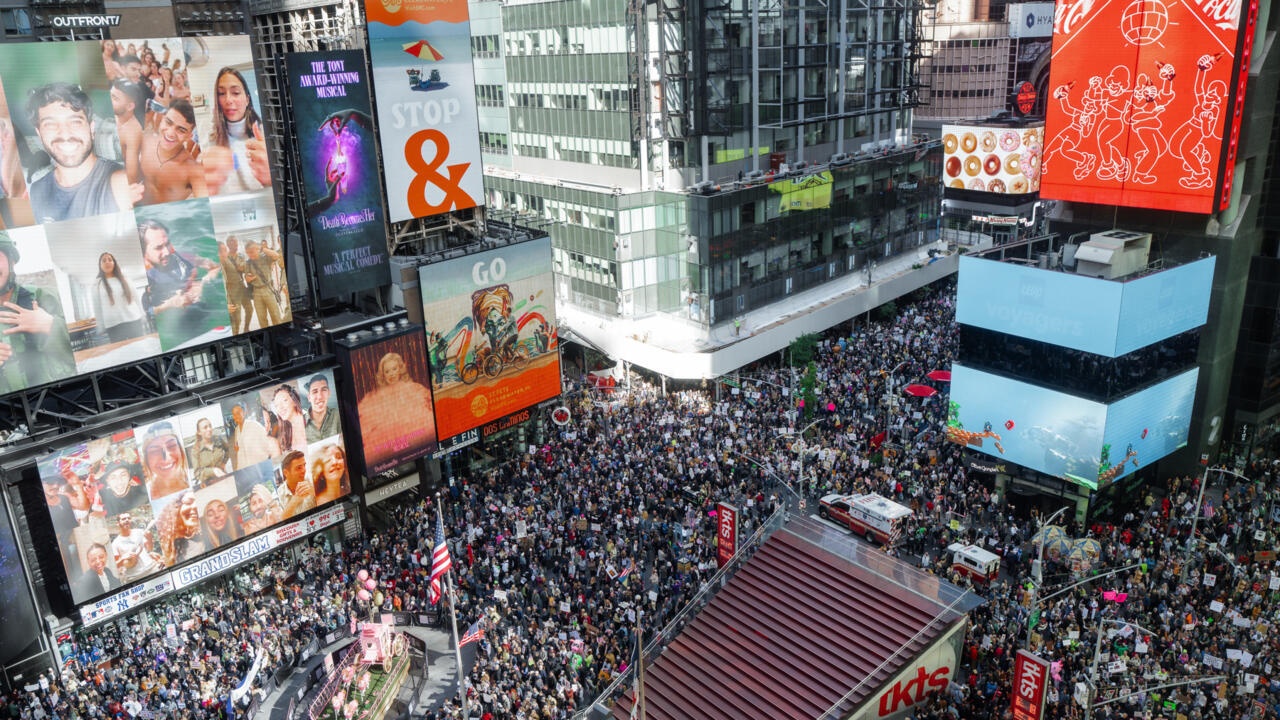
The scale of the protests was immense, with an estimated 2,600 to 2,700 events taking place in all 50 states, from major metropolitan centers to small rural towns. In Washington, D.C., crowds filled Pennsylvania Avenue near the U.S. Capitol. New York City saw thousands packing Times Square and marching through the boroughs, with the NYPD estimating over 100,000 participants citywide. Other major rallies occurred in Chicago, Los Angeles, Atlanta, and Austin, where organizers reported tens of thousands of people at each location. The movement even extended beyond U.S. borders, with solidarity demonstrations reported in European cities like London, Berlin, and Madrid.
You Might Like: Lane Kiffin’s Biggest Win: Co-Parenting and Reconciliation
A Peaceful and Colorful Display of Dissent
Despite the huge numbers, the day was marked by a largely peaceful and often whimsical atmosphere. Police departments in multiple major cities, including New York, Washington, D.C., Austin, and Charlotte, reported no protest-related arrests. A striking feature of the protests was the use of inflatable animal costumes—dinosaurs, unicorns, and frogs—which originated in Portland as a creative, non-confrontational form of protest. In Los Angeles, the mood was described as feeling “like a block party,” complete with salsa bands and people dancing in costumes. This contrasted sharply with the characterization of the events by some Republican leaders, who had labeled them “hate America” rallies.
The protests, however, had a serious core. Participants voiced strong opposition to a range of the Trump administration’s policies. Demonstrators expressed concerns about perceived authoritarian tendencies, including the deployment of National Guard troops in Democratic-led cities, widespread immigration detentions by masked ICE agents, and deep cuts to federal programs like healthcare and education.
The second “No Kings” protest is set to take place nationwide on October 18, in opposition to Donald Trump and his administration.
Organizers anticipate over 10 million participants, which would make it one of the largest protests in American history. pic.twitter.com/rZvYQDaSGT
— Pop Crave (@PopCrave) October 12, 2025
The unifying message, echoed on signs and in chants, was a defense of democratic values and the Constitution, with many protesters stating they were there precisely because they love America. Prominent Democratic figures, including Senators Bernie Sanders and Chuck Schumer, joined the rallies, reinforcing the message that the demonstrations were a patriotic stand for democracy.
Also See: The Private Roots of Sam Rivers
The Bigger Picture and Official Responses
The estimated turnout of nearly seven million people for the “No Kings” protest is a figure provided by the organizing coalition, which includes groups like Indivisible, and has been widely reported. It’s important to note that precise, independent nationwide counts for such widespread events are challenging to produce immediately. However, the scope suggests a historically significant event. For context, the 2017 Women’s March, previously considered one of the largest single-day protests, drew an estimated 3.3 to 5.6 million participants.
In the lead-up to the protests, several Republican governors, including Greg Abbott of Texas and Glenn Youngkin of Virginia, mobilized their states’ National Guard units. The White House response was dismissive; when asked about the protests, a spokeswoman simply said, “Who cares?” President Trump himself was at his Mar-a-Lago resort in Florida during the events and later responded by posting an AI-generated video on social media that depicted him bombing a crowd of protesters with brown liquid.
All in all, the October 18 “No Kings” protests represented a powerful and largely peaceful mobilization of millions of Americans. The sheer number of participants, the geographic diversity of the events, and the creative, determined spirit on display underscore a significant level of public engagement and concern over the direction of the country.